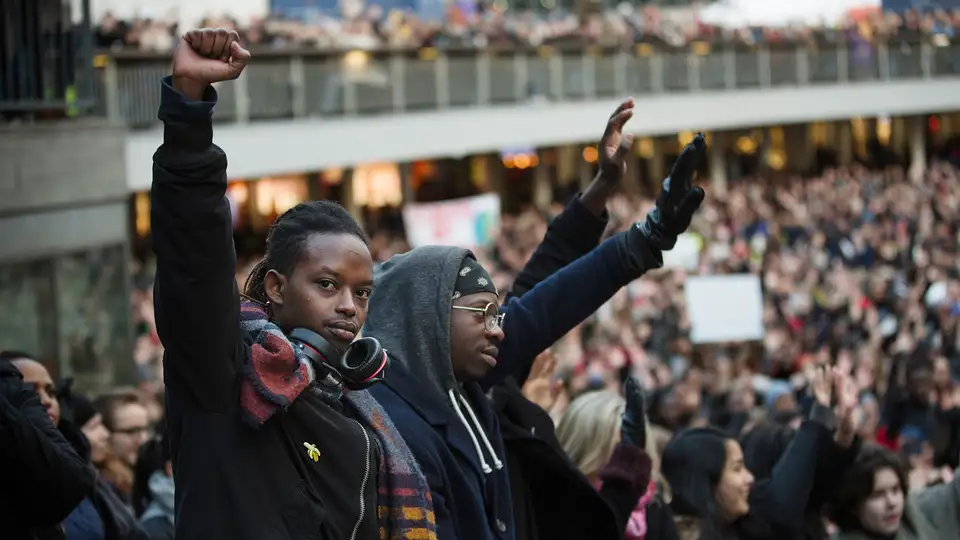
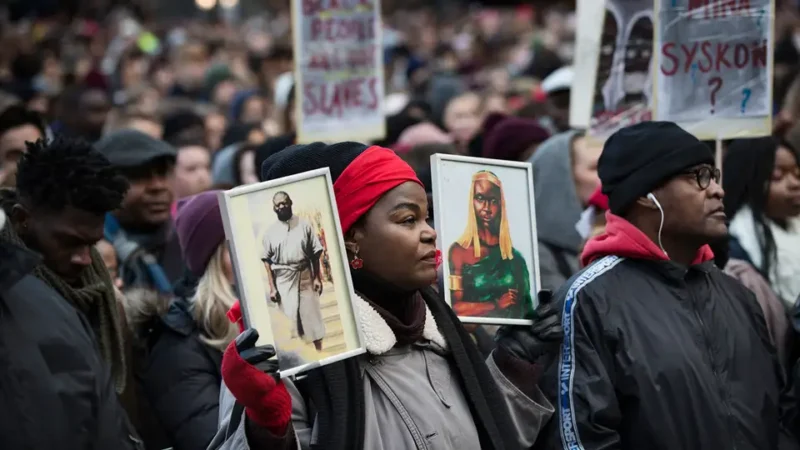
In Stockholm, demonstrations were organized by Lovette Jallow, who started the Facebook group Black Vogue and authored the book with the same name. The Lovette-led protest took place at the heart of the city’s main square, Sergels Torg, and gathered hundreds of thousands of protesters who rallied in solidarity to those who are either in jail, working as slaves, or undergoing torture in Libya. Among others, placard inscriptions contained wordings such as; ‘We are not Slaves’, ‘anti blackness is the root of racism’ etc.
Identification of Need
- Action for Humanity, led by Lovette Jallow, identified the urgent need to protest against the dehumanization and enslavement of African migrants in Libya, highlighted by a CNN video showing the sale of African migrants as slaves.
Organization of Protests
- Lovette Jallow organized during a few days a significant protest in Stockholm, Sweden, at Sergels Torg, gathering over 10,000 protesters carrying placards with messages such as “We are not Slaves” and “Anti blackness is the root of racism.”
- Similar protests were organized simultaneously in other Swedish cities, including Uppsala, Jönköping, Malmö, Göteborg, Örebro, and Linköping, showing a nationwide response to the call for action.
Initiation and Advocacy
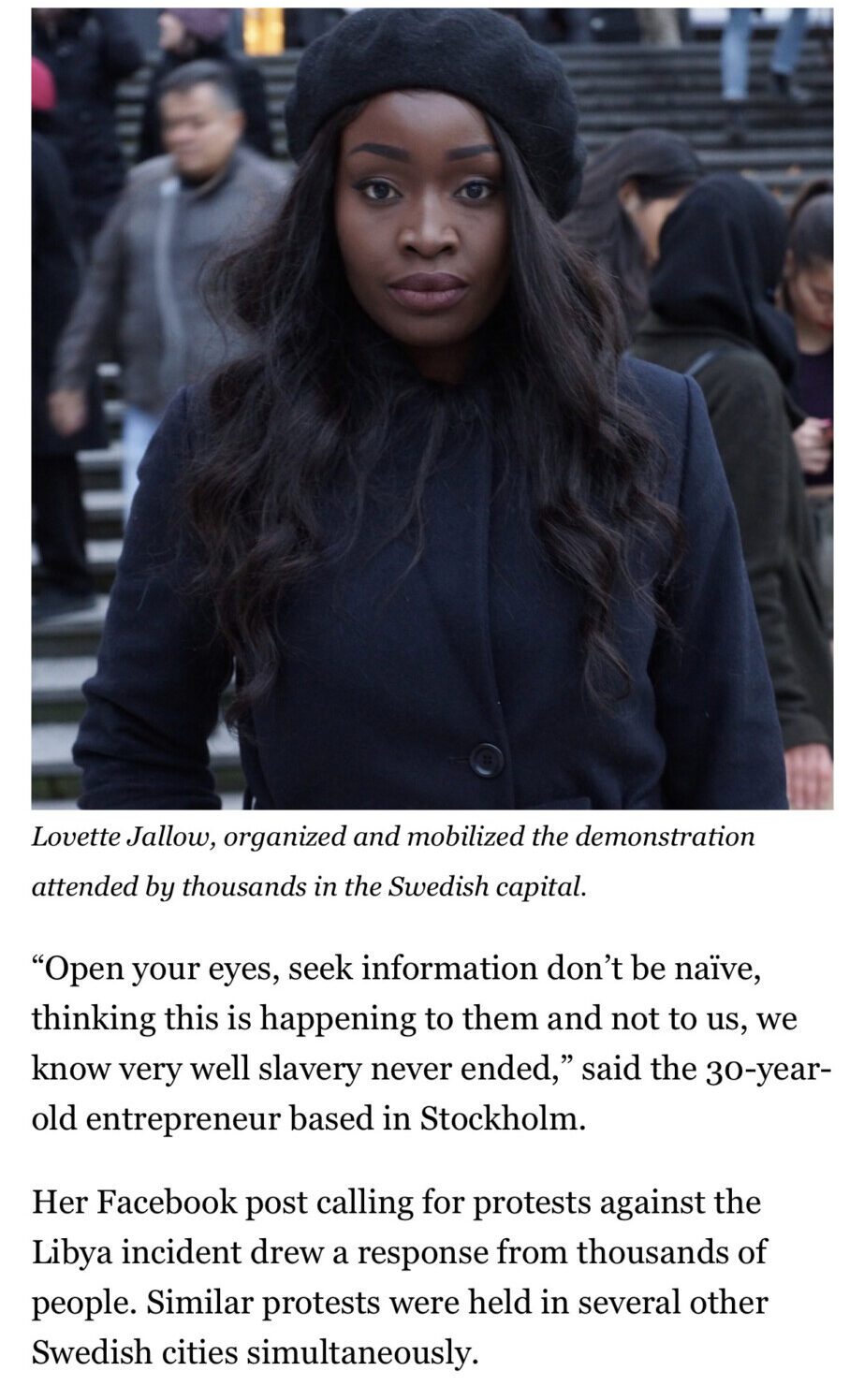
- The initiative was sparked by a CNN video clip showing African migrants being sold as slaves in Libya for as little as $100. Lovette Jallow’s advocacy efforts included rallying support through social media, particularly via a Facebook post that mobilized thousands of people.
- During the protest, Jallow emphasized the importance of individual responsibility in combating racism and discrimination, urging people to speak out against such injustices within their communities.
- Jallow’s advocacy highlighted the complicit silence of Western and African governments, as well as international bodies, in allowing these atrocities to continue.
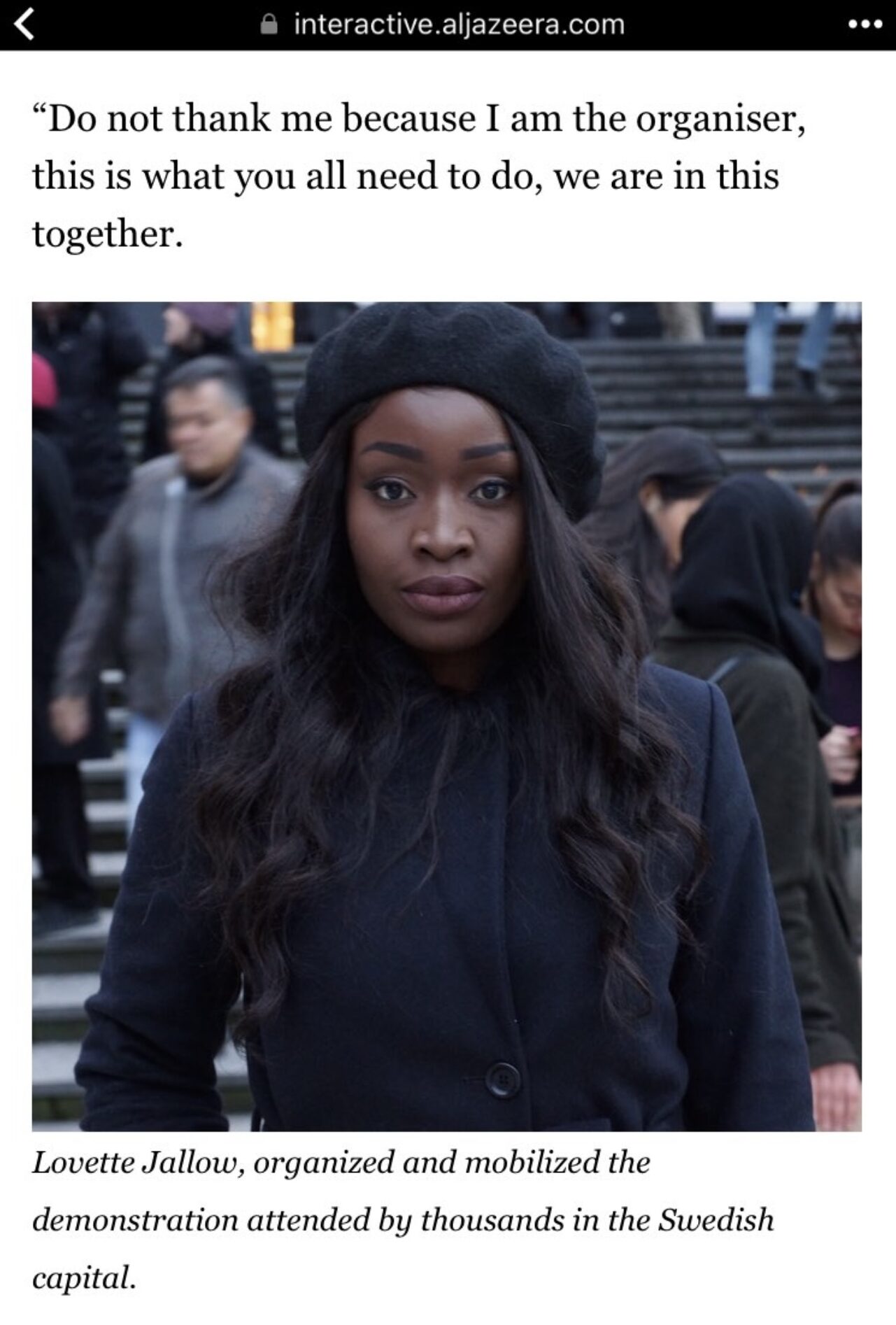
“This is a human rights issue. Don’t thank me because I am the organizer, this is what you all need to do. We are in this together.”
Overcoming Challenges
- Despite being the first time undertaking such a demonstration, the project was a success thanks to Lovette’s exceptional project management skills and the humorous, determined approach she took.
- With minimal preparation and just a few days, Lovette mobilized support using her platforms and personal funds. She found generators but had to find a car large enough to transport it to the center of Stockholm where cars are not allowed, set a date for the protest and then later applied for a protest license (finding out a priest had booked the date to preach), and navigated unexpected hurdles.
- When informed by the police that the location was booked by a priest for preaching, Lovette contacted the priest directly. After his initial refusal, she reached out to his wife, who was in the hospital about to give birth. The priest’s wife convinced him to cancel his session, allowing Lovette to hold her demonstration.
- Lovette engaged the Gambian community, many of whom are familiar with the struggles in Libya, to call in Jaw Counba, the drummers, to energize the event with ancestral rhythms. She also enlisted family members to comply with the police’s request for peacekeepers to maintain order during the demonstration.
- At the time, Lovette was also working full-time in a corporate position with CBRE Stockholm. She was reprimanded by the company for taking a stance on human rights and would later face serious repercussions for this public human right activism from them.
- Despite the challenges of organizing large-scale protests, including coordinating efforts across multiple cities, the demonstrations were successfully executed with significant public participation and media coverage.
Ongoing Support
- Action for Humanity continues to raise awareness about the ongoing human rights abuses in Libya and around the world and advocates for international intervention to stop the atrocities.
- The organization is committed to supporting similar initiatives that highlight and combat human trafficking and modern-day slavery globally.
Acknowledgment and Gratitude
- Action for Humanity acknowledges the invaluable support received from the diverse communities in Sweden and expresses gratitude to all participants and supporters of the protests.
- The organization thanks the media for their coverage, which helped amplify the message and bring global attention to the issue.
Quotes and Contributions
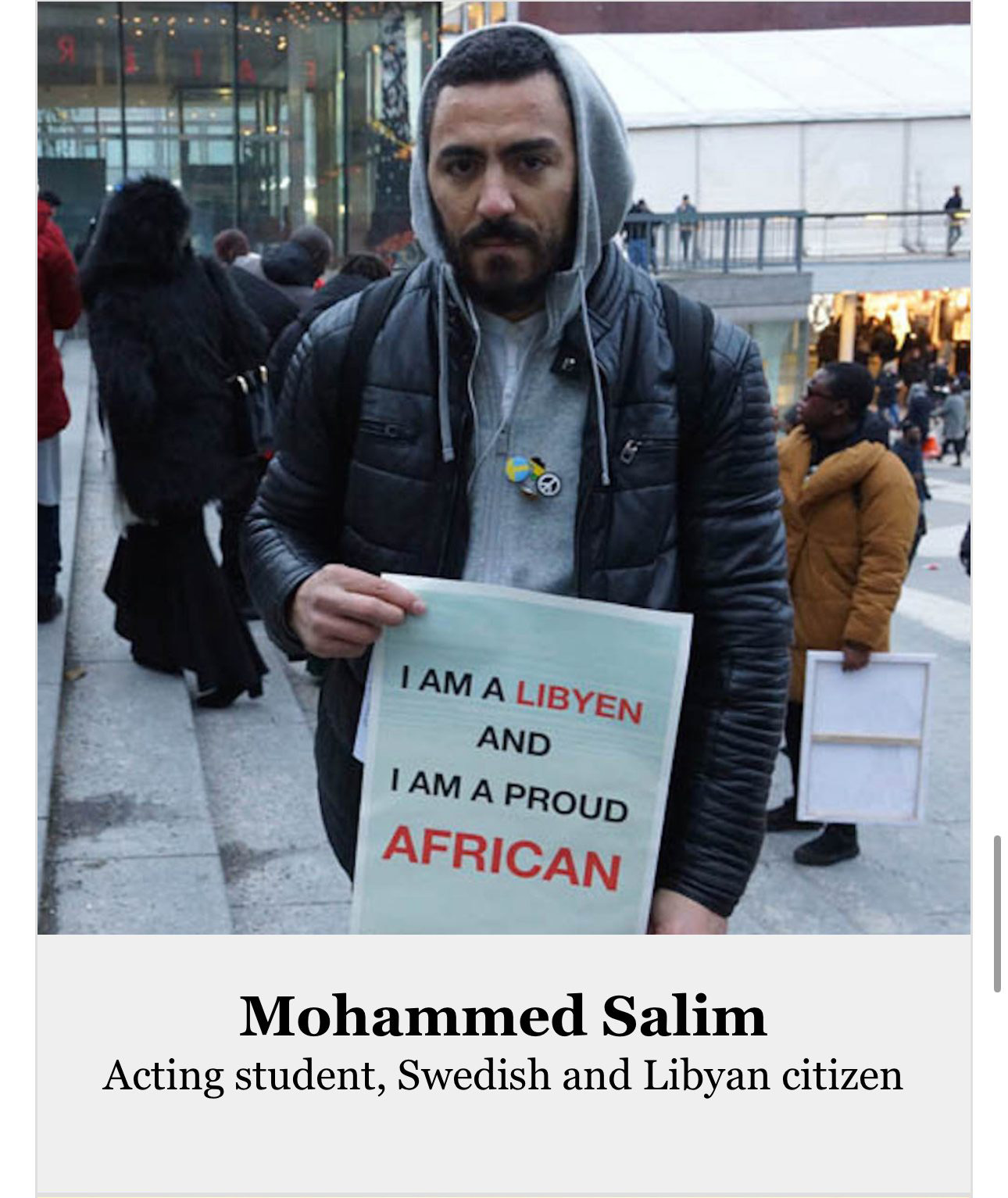
“I am not interested in politics in general, but when I first saw what happened in Libya on my social media, I felt that this is too much, and then I was put in contact with the organizer, Lovette Jallow, and the first step we took was to write a protest letter to the Libyan embassy, NATO, and the UN.”
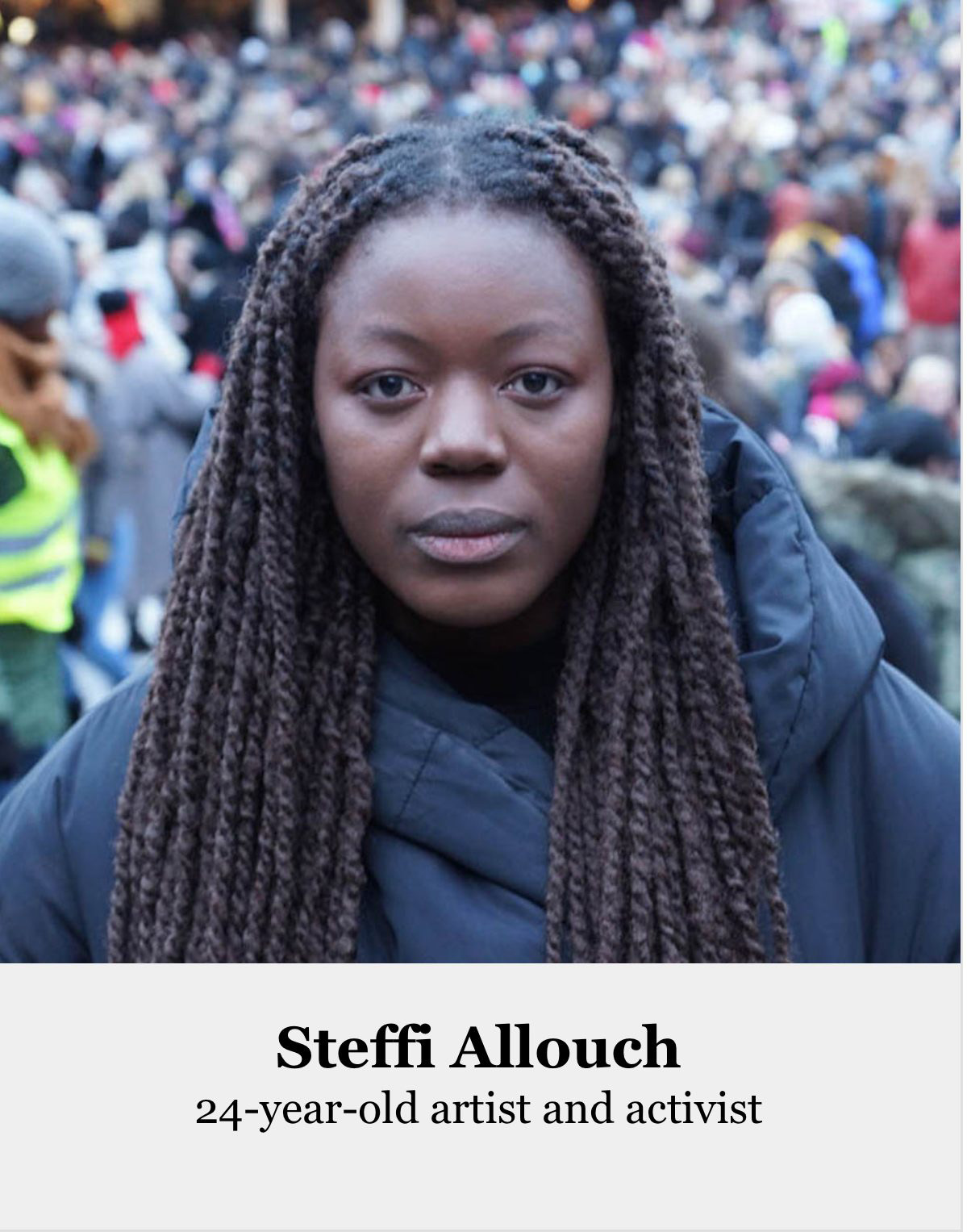
“I wanted the information to spread far and wide, and therefore I had to get creative. I also created a callout on social media that I call #sättdetpåprov in Swedish, that translates to #PutItToTheTest. By telling non-black people to put as much effort in standing up for us as they do loving what black culture creates, we can actually make real change.”
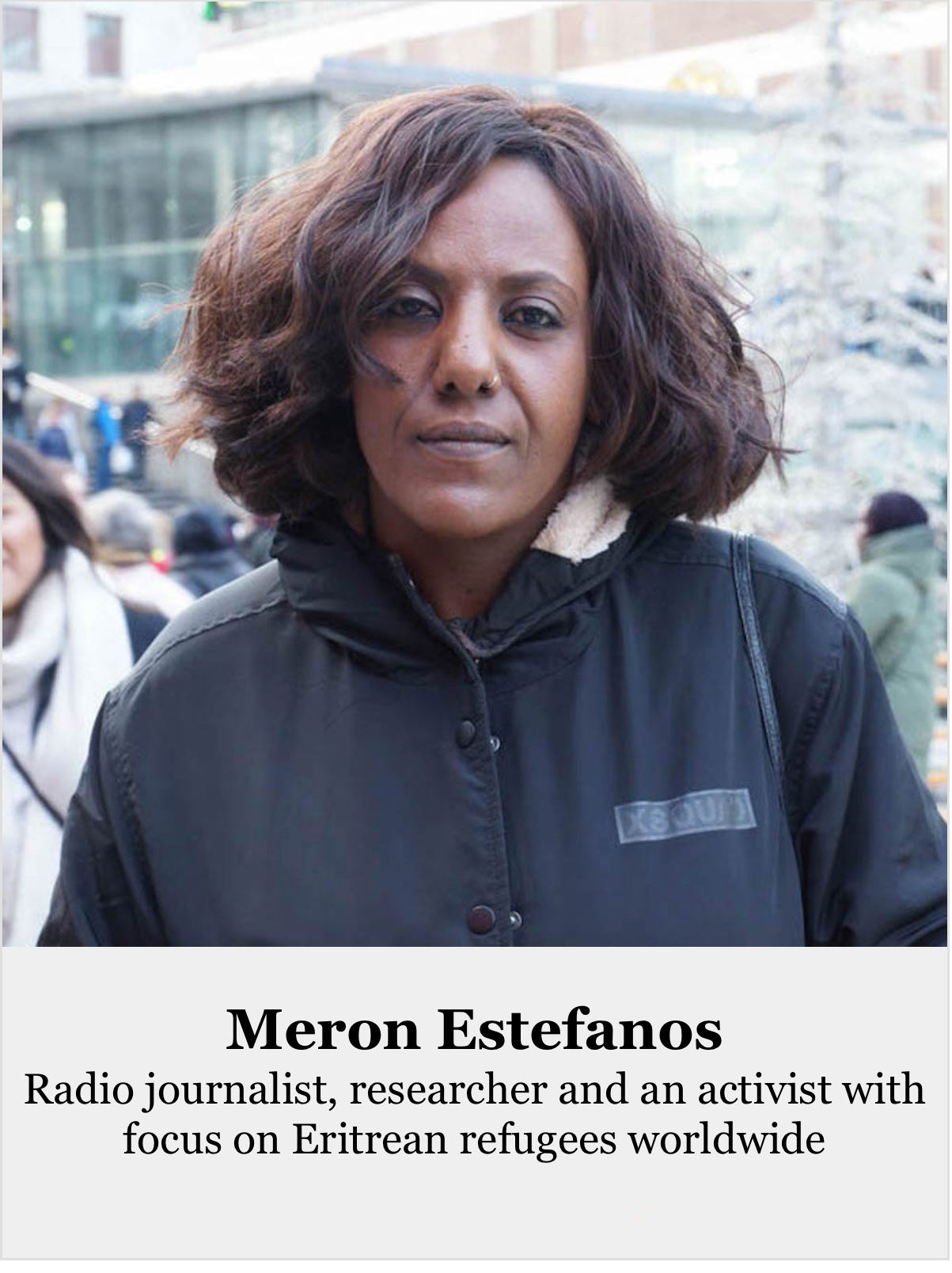
“I have seen the video with mixed feelings, one thing is that I have known about this for years, so it wasn’t a shock for me. But to actually see it as they are being auctioned was really shocking. It made me happy that someone finally captured what we have been saying for many years.”
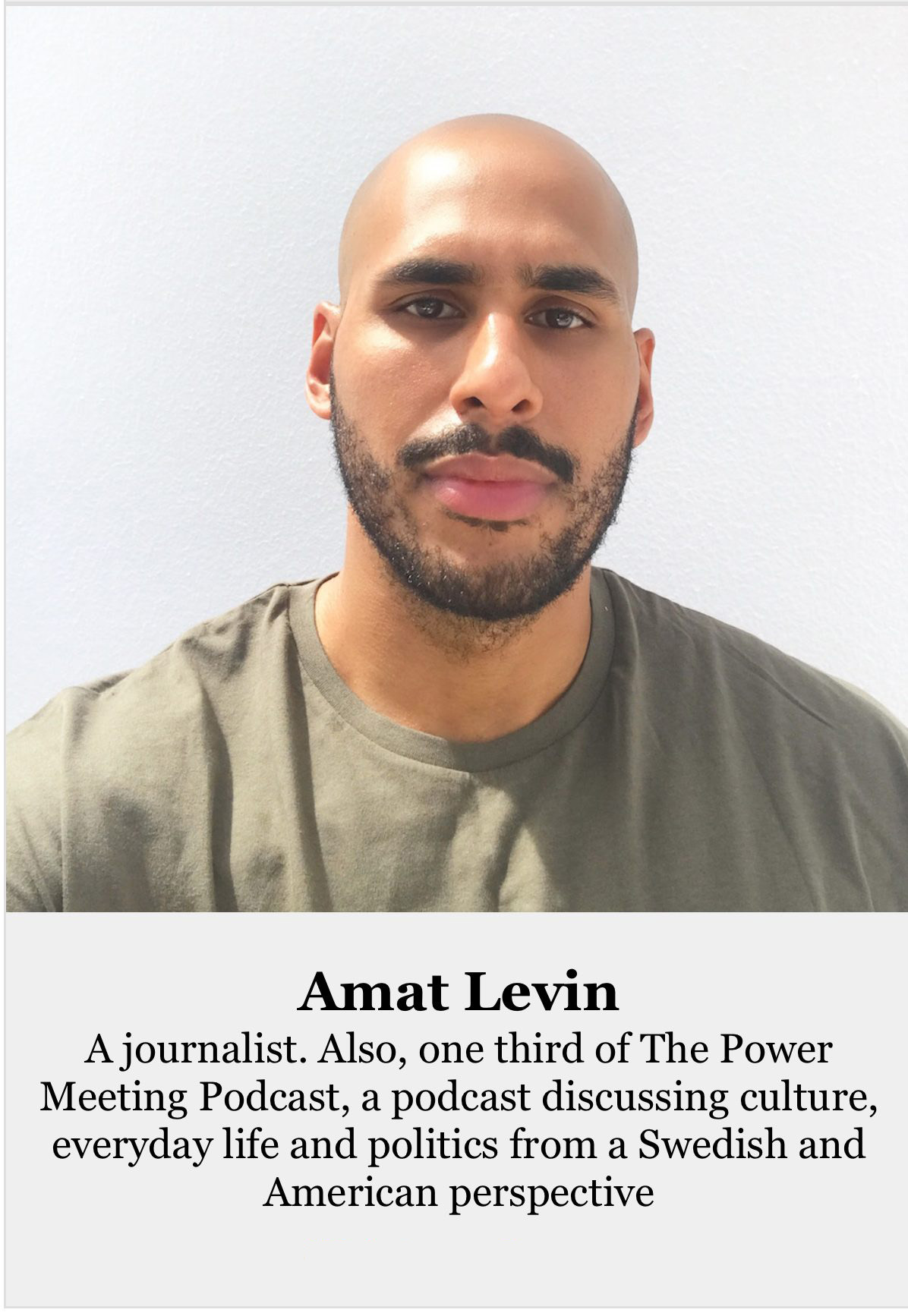
“What happens in Africa doesn’t seem to carry much weight in Sweden, unfortunately. It’s deemed to be ‘too far away’. However, I think the fact that this latest report was done by a major news organization played a part. And that they were able to get both video and sound, so people could see with their own eyes.”